


The Community Remembrance Project Coalition
Our commitment to racial reconciliation.
In 1914 a mob of 1500 St. Petersburg residents gathered at Ninth Street and Second Avenue South to watch John Evans being lynched from a light pole. In a second, 1926 episode Parker Watson was brutally murdered by white vigilantes in nearby Clearwater. These cases represent just two of the 315 reported lynchings in Florida between 1877 and 1950.
For decades the lynching of John Evans remained unmarked, or acknowledged only by a small sign, since moved to storage. Discussions to memorialize illegal acts of violence in our area had long been underway, with groups including St. Petersburg's African American Heritage Association and chapter of ASALH (Association for the Study of African-American Life and History).
Building upon these conversations, in April 2019, the Community Remembrance Project Coalition formed with the goal to establish a memorial. Working with the national Equal Justice Initiative, this group has steadily built a coalition that now includes almost 100 members and over forty partner organizations.
In July 2020 the city of St. Petersburg planning commission approved the CRPC-EJI permit application, with a marker to be unveiled in the near future.
Members of St. Augustine's have played an instrumental role in the CRPC since the beginning. Jacqueline Williams Hubbard has served as co-chair, along with Gwendolyn Reese. "It was the desire by St. Augustine's to encourage racial reconciliation," Hubbard explains, "and the fact that it was so supported by our congregation indicates a commitment to racial reconciliation."
EJI founder Bryan Stephenson reminds us that "injustice prevails when hopelessness persists." Or as author James Baldwin explains, "hope must be invented every day." St. Augustine's provides one such space where hope for the world translates into action. And as Hubbard notes, "we all have a role to play."
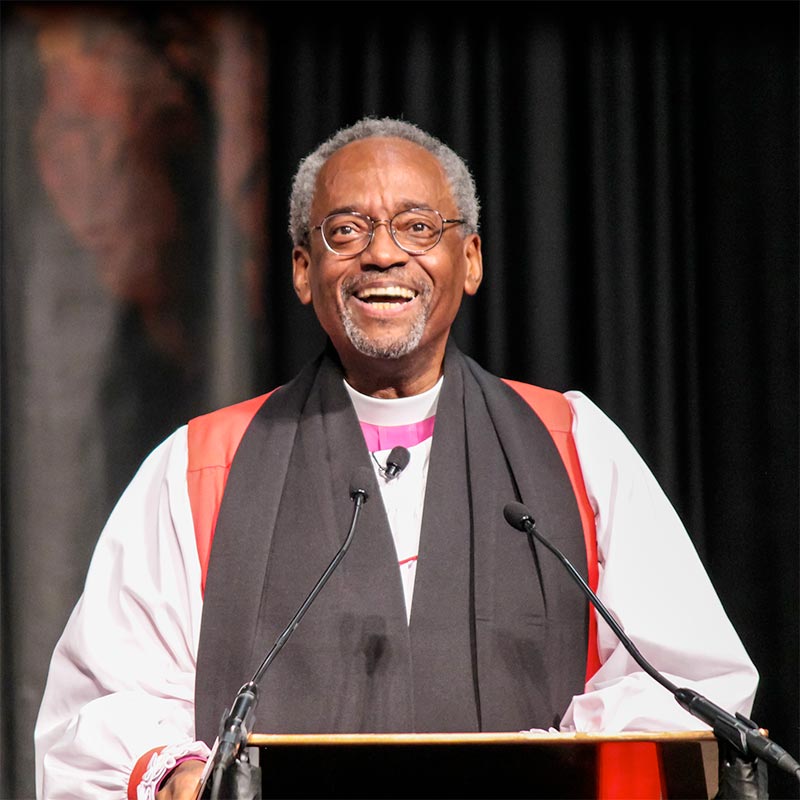
Julie Armstrong, who has written a definitive study on lynching and who is also a member of St. Augustine's, agrees. The CRPC "evolved organically from conversations centering around Bishop Michael Curry's call for racial reconciliation and building the beloved community," Armstrong explains. Members of our church have a long history of working toward those ends, she explains, and "the church provided a physical location, a safe space, that could bring others into these difficult conversations."
St. Augustine's invites you to learn more about the Equal Justice Initiative and Community Remembrance Project Coalition. We are proud to be doing our part to help build the beloved community.